Special Programs
for the
Public & Professionals
New Center For Psychoanalysis, Extension Division
2014 Sawtelle Blvd, Los Angeles, CA 90025
310.478.6541 •
info@n-c-p.org • www.n-c-p.org
Film & Mind Series
Coordinated by Thomas M. Brod, MD & Apurva Shah, MD
New Center for Psychoanalysis
2014 Sawtelle Blvd, LA 90025
This program is licensed by the MPAA to screen these films for educational purposes
Continuing Education information at: http://www.n-c-p.org/edu-filmbook.asp
See below to review past and future programming of the Film & Mind Series
This is a free community outreach event and open to all members and guests.
BlacKkKlansman
Friday, September 13, 2019, 7:30 – 11:00 PM
|
|
(2018, English)
Spike Lee directs the incredible true story of Ron Stallworth, the first African-American detective to serve in the Colorado Springs Police Department. Determined to make a name for himself, Stallworth embarks on a mission to infiltrate the Ku Klux Klan. He recruits a more seasoned (white) colleague, Flip Zimmerman, into the undercover investigation of a lifetime. Together they team up to take down the hate group in a film described by the New York Times’ A.O. Scott as “Spike Lee’s best… in over a decade.”
A discussion facilitated by Drs. Brod and Shah will be held after the film. Please note late ending time of 11 pm due to length of film.
Discussants:
Sidonie Freeman, PsyD, is a psychologist and psychoanalytic candidate at NCP and has a private practice in Beverly Hills. She is an adjunct professor at The Chicago School of Professional Psychology and offers supervision to psychological interns at the Wright Institute of Los Angeles.
Julie Tepper, PsyD, is a psychoanalyst and a senior faculty member at NCP. She has a private practice in West LA, where she works with adults, late adolescents, and couples.
|
|
The Square:
Human Moments and Relational Aesthetics
a Special Program of the Film & Mind Committee
Saturday, January 12, 2019
1:00 – 5:00 PM
3.5 CE/CME Credits
Online registration is required for CE/CME Credits
$55 with CE Credits; $25 student rate
|
|
Note: This program will be held on a Saturday afternoon.
The Square, directed by Ruben Östlund, is a film set in a modern art museum about the aesthetics of relationships. Largely misunderstood by critics when it was released, The Square offers a series of human encounters that psychotherapists ponder long after viewing. “We are exposed to an aesthetics of shaming, laying bare the hypocrisy, the selfishness and the wishful thinking embedded in the deep structures of 21st-century metropolitan existence. That existence is a cornucopia of delights masquerading as miseries, or perhaps vice versa.” (NY Times)
The program features commentary and lectures before and after the screening, plus a facilitated audience discussion.
Learning Objectives
As a result of attending this course, participants should be able to:
- Describe the invisible link (represented here as “the Square”) between boundary function and integrity of social fabric; consider the therapist’s role in promoting integrity and protecting therapeutic boundaries
- Explain the relational aspect of Aesthetic Function of the mind
- Apply the psychodynamic understanding of “symbolic articulation” (as in the function of a Museum) to clinical experience with clients/patients
- Define “Losing face” in psychological terms; sensitively apply awareness of “losing face” in clinical practice with clients/patients
Jeffrey Prager, PhD, is a psychoanalyst and psychotherapist in private practice. He received his PhD in Psychoanalysis in 1983 from the Southern California Psychoanalytic Institute, now the New Center of Psychoanalysis in Los Angeles, where he is now a Senior Faculty Member, and was formerly the Dean. He is also a Professor of Sociology at UCLA. He has published widely, both books and articles, on psychoanalytic theory and clinical practice, including his award-winning Presenting the Past, Psychoanalysis and the Sociology of Misremembering (Harvard University Press).
Lynne Oliva, PsyD, is a Training and Supervising Analyst and Faculty member at the Institute of Contemporary Psychoanalysis, and a Faculty member at the New Center for Psychoanalysis. She has a private practice in Brentwood and specializes in working with artists and writers. She is working on a book about art, desire, and the unconscious.
Seth Alt is a PhD student in the Cultural Studies Department at Claremont Graduate University, and a member of the California Forum. Seth’s dissertation research is focused on the intersections of museums, digital technology, and Lacanian psychoanalysis.
Program Coordinators:
Thomas Brod, MD (Discussion Facilitator), Distinguished Life Fellow of the American Psychiatric Association, is an Associate Clinical Professor of Psychiatry at the UCLA Geffen School of Medicine. He is a senior faculty member at NCP and co-coordinator of the Film and Mind Series. He is also on the faculty of the ISTDP Institute (Washington, D.C.).
Apurva Shah, MD, is a child and adolescent psychiatrist, and chair of the Department of Psychiatry at Kaiser Permanente in Palmdale. An Associate member of the New Center for Psychoanalysis, he is co-coordinator of theFilm and Mind Series. He is also the Founding Director and Faculty at the Antarnad Foundation, a not-for-profit psychoanalytic psychotherapy training program, in Ahmedabad, India. His primary interest, and the focus of most of his publications, is the interface of psychoanalysis and culture.
|
|
NCP’s Film and Mind Series allows clinicians to explore psychoanalytic concepts in an open and exciting discussion format. By analyzing the interpersonal dynamics between the film characters and treating the mise-en-scène (the sum total of the art and artifice in the movie) as a metaphor for the internal mental states of the characters, and by revealing the subtext of the story by highlighting the process of the plot, we can gain a better understanding of the dynamics of our patients and of the therapeutic process. Movies are geared to mental health professionals and general public who are interested in psychoanalytic ideas. Each evening starts with a brief introduction of the movies and the discussant(s). The movie (or excerpts thereof) are screened. The discussant(s) then present a brief analysis of the movie using the principles stated above and designed to stimulate a lively discussion among the participants.
|
|
310.478.6541 | 310.477.5968
info@n-c-p.org
|
|
|
|
|
|
|
|
Click for details




Click for details
Behind the Silver Screen: Psychoanalysis and Film
Apurva V. Shah, M.D. & Thomas M. Brod, M.D.
Saturday November 14, 2015

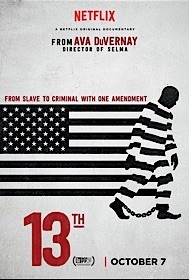
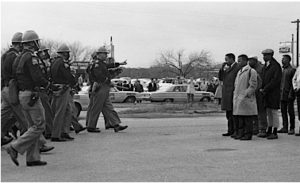
Slavery’s Shadow: Racism In the American Psyche
Saturday February 21, 2015
The tragic history of slavery in America has left its mark on all, regardless of racial identity.
An illness infects the American psyche. Call it the heritage of slavery, or racism, all Americans of our diverse culture are affected by its dynamic and pernicious projections from the unconscious.
Diverse as we Americans are, our cultural psyche has been distorted and stained by a madness about skin color, projective fear, and devaluation/overvaluation splitting. Tragic violence in society is only a surface manifestation of the destructive forces at work inside nearly every American.
In this first day-long program from the NCP Film & Mind series, psychoanalytic thought leaders will use film clips from such films as The Butler, Django Unchained, 12 Years A Slave, Get On the Bus, and Fruitvale to help us learn the depths of disturbance left in the path of the intergenerational transmission of the dehumanization trauma of slavery.
Recognizing the predominance of European heritage psychotherapists and psychoanalysts likely to be in our audience, the program will offer an opportunity for participants to process an opening of their unconscious networks under the guidance of experienced small and large group leaders.
To enhance our personal and clinical awareness as psychotherapists and psychoanalysts facilitated groups offer program participants an opportunity share and reflect on the day’s experience.
ORGANIZING COMMITTEE: Thomas Brod, MD, Chair, Ronald Boutelle, Ph.D., John Lundgren, M.D., and Apurva Shah, M.D.
details, click link: slavery program Feb 21 brochure

Observing the Erotic Imagination in Ancient India
Thomas M. Brod MD & Apurva Shah MD
Thursday August 14, 2014
Film & Mind Series
Coordinated by Thomas M. Brod, MD & Apurva Shah, MD
New Center for Psychoanalysis
2014 Sawtelle Blvd, LA 90025
310-478-6541
NCP Friday Nite Film Program
This program is licensed by the MPAA to screen these films for educational purposes
Current listing at: http://www.n-c-p.org/edu-filmbook.asp
Screenings followed by Discussion with local Psychoanalysts
Friday night programs, scheduled from 7:15 -10:15
$20 fee includes CME/CEUs.
Spring 2016 (starting time will be 7:15 pm)
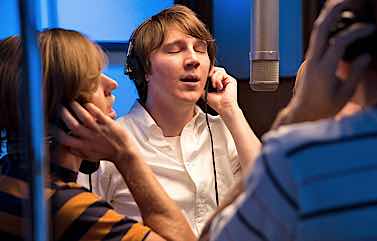
February 19 Love & Mercy Discussants: Jill Lummus, Sylvia Jones

March 4 Phoenix. Discussants: Bettina Soestwohner, Lisa Vitti
March 18 Meet the Patels Discussants: Josh Richmond, Jill Model Barth
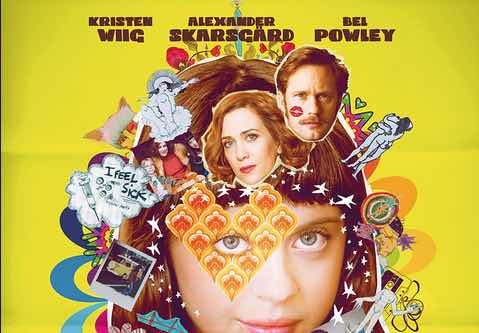
April 1, Diary of a Teenage Girl, Discussants: Elena Balashova-Shamis, Deborah Lynn
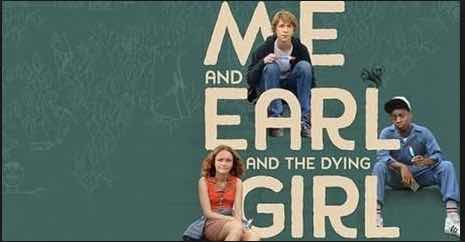
April 15 Me & Earle & the Dying Girl, Discussants: Thomas Brod, Apurva Shah
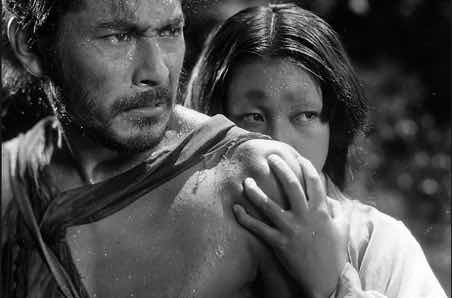
May 6, Rashomon, Dis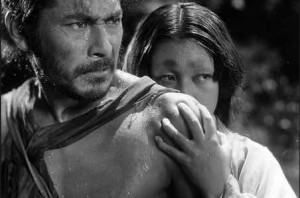 cussants: Pranav Shah + Albert Morell
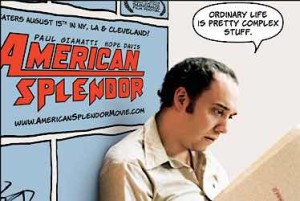 May 20 American Splendor, Discussants: Julie Tepper, Justin Shubert
 June 3, Room, Discussant: Sandra Cohen
Fall-Winter 2015
- Ex Machina, Discussants Joseph Verrone, Lisa Vitti
2. The Past, Discussants Shahin Sakhi and Afsaneh Alisobhani
- Clouds Of Sils Maris, Discussants, Janet Smith and Allan Rabinowitz
- Force Majeuere ,discussants, Bettina Soestwohner and Deborah Lynn
- It Follows, Discussants, Jill Model Barth and Josh Richmond
- Ida, Discussants, Miriam Tasini and Apurva Shah
- 7. Hiroshima Mon Amour, Discussants, Rina Freedman and Pranav Shah
Spring 2015
- Venus in Fur, discussants Thomas Brod and Joshua Richmond
- Only Lovers Left Alive, discussants Bettina Soestwohner and Kathleen Gates
- The Lunchbox, discussants Jill Model Barth andPranav Shah
- Words and Pictures, discussants Julie Tepper and Ben Kohn
- Calvary, discussants Thomas Brod and Don Freeman
- Gloria, discussants Apurva Shah and Albert Morell
Fall-Winter 2014-15
A Great Beauty, Sept 19, 2014 Under the Skin, Dec. 12
Philomena, Oct 10 Lunch Box, Jan. 16, 2015
The Railway Man, Nov. 14 Fading Gigolo, Jan. 30, 2015
Short-Term 12, Nov. 21


New Center for Psychoanalysis
2014 Sawtelle Blvd, LA 90025
310-478-6541
NCP Friday Nite Film Program Spring 2014
http://www.n-c-p.org/edu-filmbook.asp
Coordinated by Thomas M. Brod, MD & Apurva Shah, MD









 cussants: Pranav Shah + Albert Morell
 May 20 American Splendor, Discussants: Julie Tepper, Justin Shubert
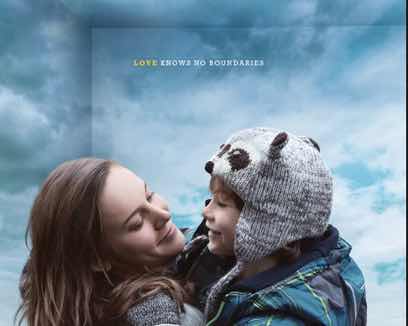 June 3, Room, Discussant: Sandra Cohen